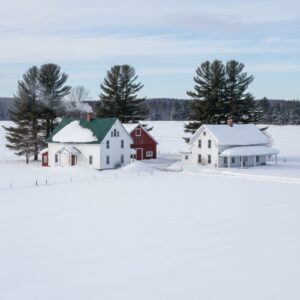
Most well-built homes in Seacoast New Hampshire can handle a normal winter’s roof snow load without any trouble, but heavy, wet snow, drifting, and ice can push an older or poorly ventilated roof past its limit. The safest approach is to know what your roof was built to carry, watch for the warning signs of strain, and clear snow from the ground before it becomes a structural problem.
This guide explains how snow load works on a New Hampshire roof, why one storm can affect two houses on the same Dover street very differently, and how to protect your home without climbing a ladder in a nor’easter.
Key Takeaways
Here’s what every Seacoast homeowner should know before the first big storm.
- Snow weight depends far more on moisture than on depth: a foot of wet, late-season snow weighs several times as much as a foot of light powder.
- New Hampshire sets design snow loads town by town, based on a statewide study by the U.S. Army Corps of Engineers’ cold regions research lab, so a roof in Lee or Nottingham may be designed for more weight than one near the coast.
- Sagging ceilings, new creaking or popping sounds, and interior doors that suddenly stick are early warning signs that a roof is carrying more than it should.
- Clearing snow from the ground with a roof rake is far safer than climbing onto a snow-covered roof, and leaving a thin layer behind protects your shingles.
What Is Roof Snow Load and Why Does It Matter in New Hampshire?
Roof snow load is the downward weight that accumulated snow and ice place on your roof structure, usually measured in pounds per square foot (psf). Every roof is framed to carry a certain amount of that weight safely, and building codes set the minimum based on how much snow typically falls and sticks around in your area.
In New Hampshire, the process starts with the ground snow load: the heaviest snow weight expected on open ground at a given location. Engineers then adjust it with factors for roof slope, exposure, and temperature to arrive at the design load for an actual roof. As one example, the City of Concord’s code office lists a ground snow load of 70 psf at 600 feet of elevation, and it notes that the value rises or falls with elevation.
Because terrain changes so quickly from the coast to the hills, New Hampshire relies on a town-by-town ground snow load study developed by the Army Corps of Engineers’ Cold Regions Research and Engineering Laboratory. In short, your roof’s capacity depends on where you live and when the house was built.
How Much Snow Can a Roof Hold Before It Becomes a Problem?
There’s no single answer to how much snow can a roof hold, because the weight of snow changes dramatically with its moisture content. Fresh, fluffy powder after a cold January storm is mostly air. The heavy, wet snow that often rolls in off the Atlantic during a Seacoast nor’easter can weigh several times as much at the same depth. Ice is heavier still.
Depth alone is a poor guide. Two feet of dry powder may pose less risk than eight inches of slush under freezing rain. These factors matter most:
- Snow type and density. Wet snow, rain falling on existing snowpack, and refrozen layers add weight quickly.
- Accumulation over time. In a winter with few thaws, storm after storm can stack up on the roof without melting off between events.
- Drifting. Wind piles snow against chimneys, dormers, and lower roof sections next to a taller wall, which can double the load in those spots.
- Roof pitch. Steep roofs shed snow on their own. Low-slope roofs hold onto it.
- The age and condition of the framing. Rafters weakened by past leaks, rot, or undersized lumber can’t carry what they once could.
For most homeowners, the better question is whether your roof is showing any sign of strain.
Which Seacoast Homes Are Most at Risk From Heavy Snow?
Some roofs simply carry more risk than others during a heavy winter. Low-slope and flat sections top the list, since snow sits on them instead of sliding off. If your home has a flat-roofed addition, porch, or garage, it deserves extra attention, and our team handles residential flat roofing repairs and replacements built for exactly these conditions.
Older homes are the second group. Dover, Portsmouth, and the surrounding towns have plenty of houses built long before modern code requirements, and many have had additions framed at different times by different builders.
Location matters too. Inland towns usually see more snow and colder temperatures than homes right along the coast. Homeowners looking for roofing services in Lee, NH or in neighboring Madbury tend to deal with deeper snowpack and longer stretches below freezing than someone living near the harbor in Portsmouth.
What Are the Warning Signs Your Roof Is Under Too Much Snow Load?
Roofs under serious stress usually give some warning before anything fails. FEMA’s Snow Load Safety Guide describes the kinds of changes building owners should watch for. Inside the house, look and listen for:
- Ceilings that sag or show new cracks, especially on the top floor
- Popping, cracking, or creaking sounds from the attic that you haven’t heard before
- Interior doors or windows that suddenly stick or won’t latch
- New cracks in drywall or plaster near the top of walls
- Water stains or drips that appear during or right after a storm
Outside, look for a ridge that dips, a bow along the eaves, or gutters pulling away from the fascia. If you notice sagging or loud cracking, get everyone out of the affected area and call a professional before anyone tries to remove snow.
Leaks that show up after a big storm are often tied to ice dams rather than structural load. If water is backing up under your shingles at the eaves, our guide on how ice dams form and how to prevent them walks through the causes and fixes.
How Should You Handle Roof Snow Removal Safely?
The safest roof snow removal happens from the ground. Climbing onto a snow-covered roof is one of the most dangerous winter chores a homeowner can take on, and FEMA’s guidance notes that trying to remove snow from a roof is often more hazardous than the snow itself. Here’s a safer approach:
- Use a roof rake with an extension pole. A roof rake lets you pull snow down from the lower few feet of the roof while you stand on the ground. Focus on the eaves and any low-slope sections first.
- Leave a few inches behind. Scraping all the way down to the shingles can tear granules or break brittle tabs in the cold. A thin layer of snow protects the surface.
- Pull straight down the slope. Raking sideways or hacking at ice can damage shingles, flashing, and gutters.
- Watch for power lines and falling snow. Keep metal poles well clear of service lines, and stay out of the path of sliding snow, especially under a metal roof.
- Never chip ice with a shovel, hammer, or pick. That’s a fast way to turn a snow problem into a leak.
If the snow is beyond reach, the roof is steep, or you’re seeing any warning signs, leave it to a professional crew with proper fall protection. Before big storms, it’s also worth reviewing the National Weather Service’s winter weather safety tips so you know what to expect.
Can You Prevent Roof Snow Load Problems Before Winter Hits?
Yes, and late fall is the best time to do it. A few steps go a long way toward keeping your roof snow load manageable all season:
- Get an inspection before the first big storm. A roofer can spot soft decking, sagging rafters, damaged flashing, and weak spots that would struggle under heavy snow.
- Fix existing leaks now. Wet, weakened wood loses strength. Scheduling a roof repair before December can save a lot of trouble later.
- Check attic ventilation and insulation. Good airflow keeps the roof deck cold and even, which reduces the melting and refreezing that builds ice layers.
- Clear gutters and downspouts. Meltwater needs somewhere to go, or it will refreeze at the edge of the roof.
- Know your problem areas. Note the valleys, step-downs, and flat sections where snow drifts so you can check them after each storm.
If your roof is near the end of its life or was built well below current standards, replacing it with a properly framed and ventilated system is the long-term fix. A residential roof installation is also the right moment to correct undersized framing or add snow guards where needed.
What Does Our Winter Roof Evaluation Look Like?
When a homeowner calls us worried about snow, we follow the same five-step process we use on every project, adjusted for what winter demands:
- Contact. You reach out and tell us what you’re seeing, whether that’s a sagging ceiling, a new leak, or simply concern about an older roof heading into winter.
- Inspection Appointment. One of our experts evaluates the roof surface, the attic framing, ventilation, and the areas where snow and ice collect, then explains what we find in plain language.
- Proposal Process. We provide a free estimate with clear options, from targeted reinforcement and repairs to a full replacement, along with a realistic timeline that accounts for winter weather.
- Installation and Clean-Up. Our crew completes the work safely and leaves your property clean, including clearing debris from the yard and driveway.
- Satisfaction Follow-Up. We check in after the work is done to make sure your roof is performing the way it should through the rest of the season.
We work with homeowners across the Seacoast and inland, including families who need roofing in Nottingham, NH, where winters can run noticeably colder and snowier than in Dover.
Roof Snow Load FAQs for Seacoast New Hampshire Homeowners
Homeowners in Dover and nearby towns ask us these questions every winter.
How much snow is too much for a roof in New Hampshire?
It depends on the snow’s weight and how your roof was designed rather than on a set number of inches. New Hampshire assigns ground snow loads town by town, and a roof’s design capacity is calculated from that figure. As a practical rule, pay closer attention after back-to-back storms, heavy wet snow, or rain on top of snowpack, and act quickly if you notice sagging, cracking sounds, or sticking doors.
Should I shovel snow off my roof myself?
We don’t recommend climbing onto a snow-covered roof. Falls are a serious risk, and shovels can damage shingles and flashing. Use a roof rake from the ground to clear the lower edge, and call a professional crew with fall protection for anything you can’t reach safely.
Can a roof rake damage my shingles?
It can if you scrape all the way down to the surface or pull at frozen ice. Choose a rake with a plastic blade or rollers, pull straight down the slope, and leave a couple of inches of snow on the roof. That thin layer protects the shingles while still removing most of the weight.
Are older homes in Dover more vulnerable to heavy snow?
Often, yes. Many older homes in Dover and nearby towns were framed before current codes, and some have rafters weakened by past leaks or additions built at different times. A pre-winter inspection is the simplest way to find out whether your framing needs reinforcement before a big storm tests it.
Does a metal roof eliminate snow load concerns?
A metal roof sheds snow faster than most other materials, which reduces how long heavy snow sits on the structure. It doesn’t remove the need for sound framing, though, and sliding snow can create its own hazards over entries and walkways. Snow guards and proper installation keep that shedding under control.
Ready to Find Out How Your Roof Will Handle This Winter?
If you’re unsure whether your roof can handle this winter, schedule your free roof inspection with Dover Roofing LLC today and get a clear answer before the next storm arrives.